Category: How to Get from ?

  • How to Get from New Chitose Airport to Daiwa House Premist Dome

    [J.League Stadium Guide]

    A complete travel guide for international football fans visiting Hokkaido Consadole Sapporo’s home stadium


    About the Stadium

    The home stadium of Hokkaido Consadole Sapporo is the Daiwa House Premist Dome.
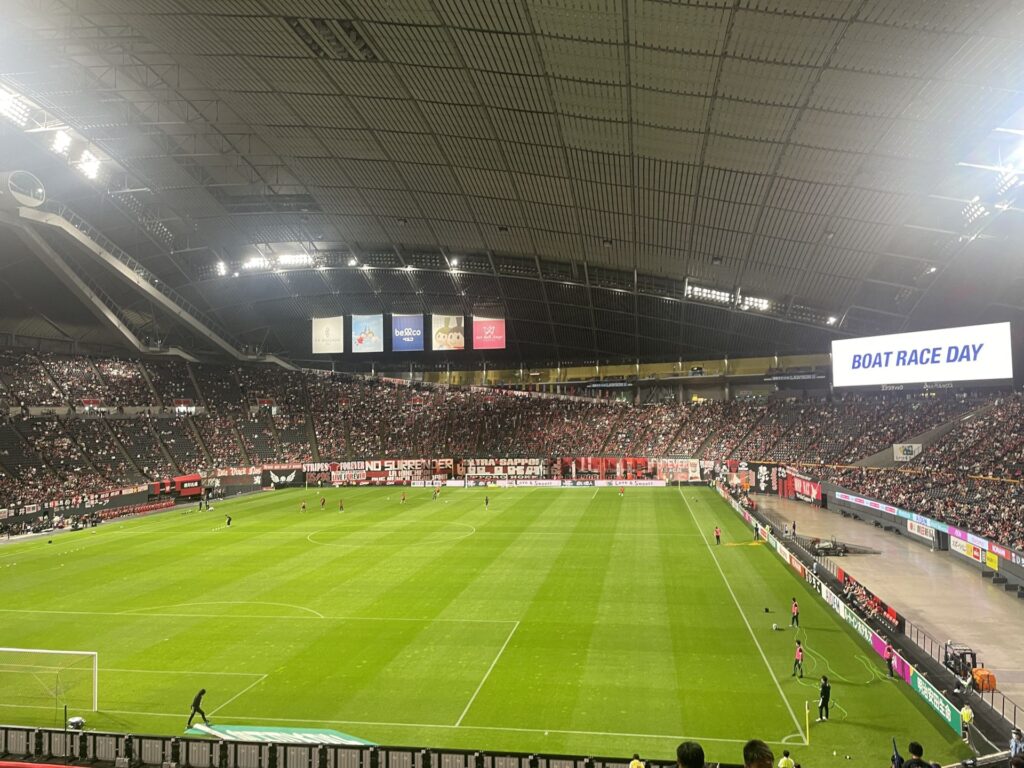
    The stadium was previously called “Sapporo Dome.” The name changed because a company paid for the right to put their name on it — this is called a naming rights deal, and it is common in football around the world.

    The stadium holds about 41,000 people. It is the largest football stadium in Hokkaido.


    STEP 1: New Chitose Airport → Sapporo Station (by train)

    When you arrive at New Chitose Airport, take the JR Airport Express train. This is the fastest and most convenient way to reach central Sapporo.

    • Departure point: New Chitose Airport Station (underground floor of the airport terminal building)
    • Destination: JR Sapporo Station (the last stop)
    • Travel time: About 37 minutes
    • Fare: ¥1,150 (approx. $7.30 USD) (as of 2025)

    How to Buy a Ticket (for international visitors)

    Option 1: Use an IC Card (recommended)

    An IC card is a rechargeable smart card for public transport in Japan. Cards such as Suica and ICOCA work on almost all trains and subways across Japan. Just tap your card on the reader when you board and exit.

    If you do not have one, you can buy a Suica card at the ticket machines inside the airport. The machines have an English menu, so it is easy to use.

    The same IC card also works on the Sapporo City Subway, which you will need in the next step. Using one card for the whole journey is much easier than buying separate tickets each time.

    Option 2: Buy a Paper Ticket

    At the ticket machine inside the airport, select “Sapporo” and pay ¥1,150. The machines have menus in English, Chinese, and Korean.

    Note: If you have a Japan Rail Pass (JR Pass), you can use it on the JR Airport Express. However, JR Pass is not valid on the Sapporo City Subway, which you will use in the next step.


    STEP 2: Sapporo Station → Fukuzumi Station (by subway)

    After you arrive at JR Sapporo Station, transfer to the Sapporo City Subway – Toho Line. The Toho Line is the closest subway line to the stadium.

    • Transfer: Walk about 5 minutes from JR Sapporo Station. The stations are connected by an underground passage.
    • Boarding point: Sapporo Station on the Toho Line (written as “さっぽろ” in Japanese)
    • Destination: Fukuzumi Station (the last stop)
    • Travel time: About 15 minutes
    • Fare: ¥290 (approx. $1.85 USD)

    Fukuzumi Station is the last stop on the Toho Line, so you do not need to worry about missing your stop.

    How to Pay

    Use the same IC card (Suica, etc.) from Step 1 — just tap in and out. If you are paying cash, buy a ¥290 ticket at the subway ticket machine. The machine has an English menu.


    STEP 3: Fukuzumi Station → The Stadium (on foot)

    When you exit Fukuzumi Station, you can already see the stadium right in front of you. It is about a 10-minute walk.

    There are two routes from the station exit to the stadium.


    Route A: Main Route Along the Main Road (recommended for first-time visitors)

    1. Exit from Exit 2 at Fukuzumi Station.
    2. Walk straight north along the wide road (Fukuzumi-Kuwazono Street).
    3. You will arrive at the main gate of the stadium.

    Walking time: About 10 minutes

    Features: The road is wide and there are many signs to guide you. Before the match, many fans walk this route, so it is hard to get lost. There are also restaurants and convenience stores along the way.


    Route B: Hitsujigaoka Street Scenic Route

    1. Exit from Exit 1 at Fukuzumi Station.
    2. Walk northeast along Hitsujigaoka Street.
    3. You will arrive at the south gate of the stadium.

    Walking time: About 12 minutes

    Features: You walk through green Hokkaido scenery. This route is quieter than Route A and is good if you prefer a more relaxed walk to the ground.

    Tip: After the match, both routes will be very busy. One good option is to stay near the stadium for a little while before heading to the subway.


    Option: By Bus

    Highway buses (operated by companies such as Hokuto Kotsu and Jotetsu Bus) also run between New Chitose Airport and central Sapporo.

    • Travel time: About 70–90 minutes (depending on traffic)
    • Fare: Around ¥1,100 (approx. $7.00 USD)
    • Departure point: Bus stop on the 1st floor of the airport

    However, there is no direct bus service to the stadium. The bus ends at a bus terminal in the city center (near Odori or Susukino). You will then need to take the subway from there.

    Because this adds extra time and steps to your journey, we strongly recommend the train route (JR + Subway) instead.

    Match Day Shuttle Bus: Hokkaido Consadole Sapporo sometimes runs special shuttle buses on match days. Check the club’s official website or official social media before you travel.


    Journey Summary

    SectionTransportTravel TimeCost
    New Chitose Airport → Sapporo StationJR Airport ExpressApprox. 37 min¥1,150 (~$7.30)
    Sapporo Station → Fukuzumi StationSubway (Toho Line)Approx. 15 min¥290 (~$1.85)
    Fukuzumi Station → StadiumWalking (Route A or B)Approx. 10–12 minFree
    TotalApprox. 65–70 minApprox. ¥1,440 (~$9.10)

    Exchange rate used: approx. ¥158 = $1 USD (as of April 2026)


    One More Thing: Stadium Food

    Daiwa House Premist Dome has a great selection of stadium food — food and drinks sold inside and around the stadium on match day. This is a fun part of the Japanese football experience.

    Before and after the match, be sure to try some famous Hokkaido dishes:

    • Jingisukan – Hokkaido-style grilled lamb BBQ, cooked at the table
    • Soup Curry – a Sapporo specialty: a thin, spiced curry broth with vegetables and meat
    • Seafood – fresh local seafood from Hokkaido

    Enjoy the match — and the food — with football fans from all over the world!


    Information is based on 2025 data. Fares and timetables may change. Please check the official websites of each transport operator for the latest information.
  • Getting to Nagoya Grampus: A Complete Stadium Access Guide from Centrair Airport

    Introduction

    Nagoya Grampus is a professional football club based in Nagoya. They play in J1 League — the top division of Japanese football (similar to the Premier League or Bundesliga). The club uses two home stadiums. Which stadium they use depends on the match.

    • Toyota Stadium — located in Toyota City, Aichi Prefecture
    • Paloma Mizuho Stadium — located in Mizuho Ward, Nagoya City

    Always check the official Nagoya Grampus website before your visit to confirm which stadium is being used.

    This guide explains how to travel from Chubu Centrair International Airport (Centrair) to both stadiums. It covers trains, buses, and walking routes. Even if this is your first time in Japan, you will be able to travel with confidence.


    ■ Getting to Toyota Stadium

    Toyota Stadium is the main home ground of Nagoya Grampus. It holds approximately 45,000 spectators. The stadium stands beside the Yahagi River in Toyota City, Aichi Prefecture. Most large matches are held here.


    ▶ By Train

    Centrair → Meitetsu Toyota-shi Station

    1. From inside the terminal, enter Meitetsu Chubu Centrair Station. There is only one ticket gate. You will not get lost.
    2. Board a train on the Meitetsu Airport Line. Choose a train heading toward Kanayama. It is a direct service. The journey takes about 28 minutes.
    3. At Kanayama Station, transfer to the Nagoya Municipal Subway Meijo Line. Board a train heading toward Sakae.
    4. At Kami-Maetsu Station (4 stops later), transfer to the Subway Tsuruma Line. This line connects directly to the Meitetsu Toyota Line — you do not need to change trains again. Stay in your seat.
    5. Get off at Toyota-shi Station.

    Journey time: approximately 1 hour 30 minutes – 1 hour 50 minutes Fare: approximately ¥1,000 (around $6.30 USD) when using an IC card (prepaid contactless card)

    Tip: The Meitetsu “μ-SKY” (Mu-Sky) is a limited express service connecting the airport to central Nagoya. All seats are reserved and require an extra fee of ¥360 (about $2.30 USD). If you want to avoid the extra charge, choose a regular express (“Junkyuu”) or express (“Kyuukou”) train instead.


    ▶ How to Buy and Use an IC Card

    An IC card is a prepaid contactless card for trains and buses in Japan. Just tap the card at the ticket gate when you enter and exit. You do not need to buy a paper ticket each time.

    How to buy one:

    1. Use the ticket machine near the ticket gate at Meitetsu Chubu Centrair Station.
    2. Switch the screen to English — press the “English” button on the screen.
    3. You can buy a “manaca” card (the IC card for the Nagoya area). The minimum purchase is ¥1,500 (about $9.50 USD), which includes a ¥500 (about $3.20 USD) refundable deposit.
    4. You can pay by cash or credit card.
    5. If you already have a Suica or PASMO card (the IC cards used in Tokyo), you can use them directly. You do not need to buy a new card.

    Good to know: The manaca card works on most trains and buses across Japan, including the Suica network. It is a national standard contactless card.


    ▶ By Bus (Direct Service: Airport → Toyota City)

    Meitetsu Bus operates a direct highway bus from Centrair to Toyota City. This is a good option if you are not comfortable with train transfers.

    • Departure point: Bus stop at the ground floor (1F) of Centrair Terminal 1
    • Arrival stop: “Meitetsu Toyota Hotel Mae” bus stop — about 2 minutes’ walk from Toyota-shi Station, and about 15 minutes’ walk from the stadium
    • Journey time: approximately 1 hour 20 minutes
    • Fare: ¥1,750 (about $11.10 USD) — payable on board, or you can buy in advance at the airport travel centre or via a booking app
    • Departures per day: 3 buses (10:50 / 13:55 / 17:35)

    ⚠️ Important: There are only 3 buses per day. For evening or night matches, the return bus may not be available. Please use the train to return to the airport.


    ▶ Walking from the Station to the Stadium

    Toyota Stadium has two nearby stations: Meitetsu Toyota-shi Station and Aichi Loop Railway Shin-Toyota Station. These two stations are next to each other — about a 2-minute walk apart. You can walk to the stadium from either one.

    [Route 1] Main Boulevard Route — easiest to follow (approx. 15–17 minutes)

    Exit through the East Exit of Meitetsu Toyota-shi Station. You will see a wide main street directly in front of you — the Station Boulevard. Walk straight along it. At the end of the road, you will see the Toyota Bridge (Toyota Ohashi). Cross the bridge. The stadium will be right in front of you. You are very unlikely to get lost.

    [Route 2] Yahagi Riverside Route — scenic walk (approx. 20 minutes)

    From the east exit of Shin-Toyota Station, head toward the Yahagi River. Follow the riverside path in the direction of the stadium. On match days, many supporters use this route. You can enjoy the atmosphere along the river before kick-off.

    Match day info: A match day shuttle bus may operate from Toyota-shi Station to the stadium on certain match days. Check the official Nagoya Grampus website for the latest information.


    ■ Getting to Paloma Mizuho Stadium

    🎉 BRAND-NEW STADIUM! Paloma Mizuho Stadium was completed in March 2026. Its inaugural match (the very first official game at the new stadium) was played on 19 April 2026 — a J1 League match between Nagoya Grampus and Avispa Fukuoka. The stadium opened to the general public on 22 April 2026. It was built over approximately three years.

    Paloma Mizuho Stadium is located in Mizuho Ward, Nagoya City. It holds approximately 30,000 spectators and has a natural grass pitch. The stadium serves as a home ground for Nagoya Grampus. It will also be used as a main venue for the 2026 Asian Games and Asian Para Games (a major multi-sport event for athletes across Asia), to be held in Nagoya in the autumn of 2026. The stadium is directly connected to Nagoya’s subway network, making it very easy to reach.


    ▶ By Train

    Centrair → Mizuho Undojo Higashi Station (Recommended Route — East Entrance)

    1. Take the Meitetsu Airport Line to Kanayama Station. The journey takes about 28 minutes.
    2. At Kanayama Station, transfer to the Nagoya Municipal Subway Meijo Line. Board a train heading toward Yagoto or Motoyama.
    3. Get off at Mizuho Undojo Higashi Station (4 stops later). The stadium is about 7–10 minutes on foot.

    Journey time: approximately 55 minutes – 1 hour 10 minutes Fare: approximately ¥750–¥900 (about $4.75–$5.70 USD) when using an IC card


    Centrair → Mizuho Undojo Nishi Station (West Entrance)

    1. Travel to Kanayama Station in the same way.
    2. From Kanayama Station, board the Meijo Line and transfer at Yabacho Station to the Subway Sakuradori Line.
    3. Get off at Mizuho Undojo Nishi Station. The stadium is about 10 minutes on foot.

    Hint: The route via Mizuho Undojo Higashi Station (Meijo Line) is the closest and easiest to follow. If this is your first visit, use the East Entrance route.


    ▶ By Bus (from Kanayama Station)

    From Kanayama Station, you can take a Nagoya City Bus (Route Kanayama 15) to a stop very close to the stadium. This option involves fewer transfers and is convenient if you have luggage.

    • Departure point: Kanayama Bus Terminal (at Kanayama Station)
    • Stop to get off: “Mizuho Grand” bus stop — about 1 minute’s walk to the stadium
    • Fare: ¥210 (about $1.35 USD) — IC cards accepted

    Note: Kanayama Station is a large transport hub where Meitetsu Railway, JR, and the subway all meet. After arriving from the airport, transferring to the bus at Kanayama reduces the number of train changes you need to make.


    ▶ Walking from the Station to the Stadium

    [Route 1] East Route: from Mizuho Undojo Higashi Station (Meijo Line) — approx. 7–10 minutes

    Exit the station and walk west. Continue straight through the residential streets. You will arrive at the east entrance of the stadium. There are signs along the way. On match days, just follow the supporters — you will reach the stadium easily. This is the shortest route and the one we recommend.

    [Route 2] West Route: from Mizuho Undojo Nishi Station (Sakuradori Line) — approx. 10 minutes

    Exit the station and walk east. This route passes through the greenery of Mizuho Park. The park includes an athletics track, a gymnasium, and a baseball stadium. You can enjoy the relaxed atmosphere of the park before the match.

    Match day tip: Subway trains run frequently. Getting home after the match is usually straightforward. If you want to avoid the crowds, consider staying near the stadium for a short while after the final whistle before heading to the station.


    ■ Ticket and Payment Options: Quick Summary for International Fans

    MethodRatingKey Points
    IC card (manaca / Suica / etc.)★★★ Best optionJust tap and go. No need to buy a ticket each time.
    Buy a paper ticket with cash★★ PossibleSelect “English” at the ticket machine. Check the fare to your destination first.
    Highway bus (Airport → Toyota City / Toyota Stadium only)★★ Simple and directOnly 3 buses per day. The last return bus is early — be careful.
    City bus (Kanayama → Mizuho / Paloma Mizuho Stadium only)★★ Fewer transfersDirect from Kanayama Station to a stop right next to the stadium.

    Summary: To reach both stadiums from Centrair, you will combine the Meitetsu Railway with the Nagoya Municipal Subway. One IC card covers all these journeys. There are several transfers, but station signs are displayed in English, Chinese, and Korean — so first-time visitors can navigate with confidence.


    Exchange rate used: approx. ¥158 per USD (as of April 2026)

  • How to Get from Kansai International Airport to Panasonic Stadium Suita – Complete Access Guide

    About the Stadium

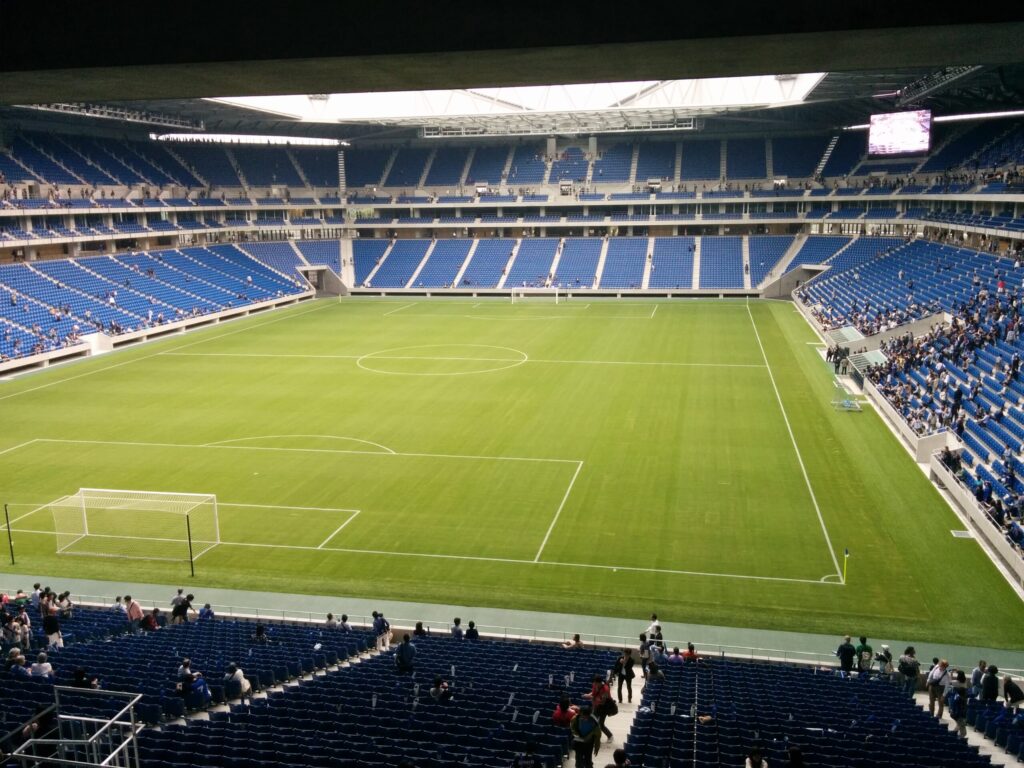
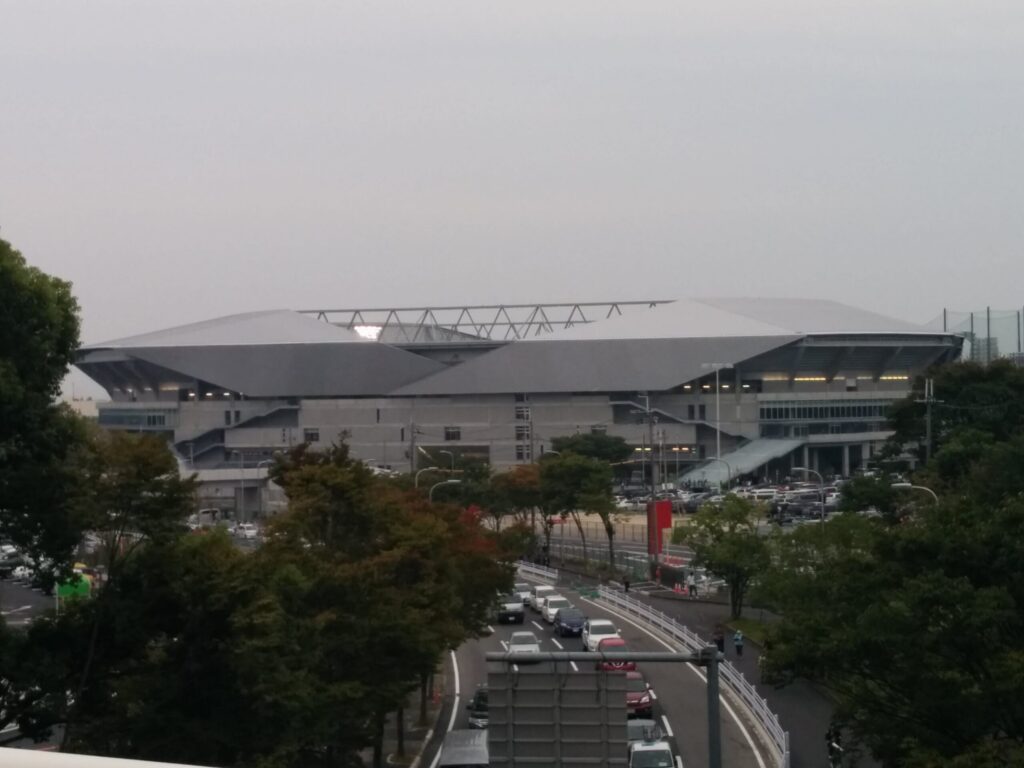
    Panasonic Stadium Suita is the home ground of Gamba Osaka, a club in J1 League — the top division of Japan’s professional football league, known as the J.League. The stadium’s official name is “Mitsui Suita City Football Stadium,” but it is currently called Panasonic Stadium Suita through a naming rights sponsorship — a deal where a company pays to have its name on the stadium. The sponsor is Panasonic, one of Japan’s leading electronics companies.

    This stadium has a few features that are rare even by global standards. It was the first football-only stadium in Japan built entirely with donations from local citizens and companies — no public tax money was used. It holds around 40,000 spectators. The distance from the pitch to the touchline (sideline) is only about 7 metres, which puts fans very close to the action. Every seat is covered by a roof, so you stay dry even on rainy days.


    Getting from Kansai International Airport (KIX) to the Stadium: Overview

    By train, the journey from KIX to the stadium takes about 75 to 90 minutes. KIX is not close to the stadium, so please allow plenty of time.

    The basic steps are simple:

    1. Travel from KIX into central Osaka.
    2. Take the Osaka Metro (subway) Midosuji Line to Senri-Chuo Station.
    3. Transfer to the Osaka Monorail and get off at Banpaku-Kinen-Koen Station.
    4. Walk about 15 to 20 minutes from the station to the stadium.

    By Train: Two Route Options

    Route A: Via JR “Haruka” Express Train (Recommended for easy transfers)

    Step 1 | KIX → Shin-Osaka Station (JR Haruka)

    At JR Kansai Airport Station, board the “Haruka” — an airport express train operated by JR West that connects KIX to central Osaka. It takes about 50 minutes to Shin-Osaka Station.

    Note: The Haruka requires a separate limited express ticket in addition to your base fare. You cannot use an IC card alone. There is a discounted ticket called the “HARUKA Discount Ticket for Foreign Visitors.” Show your passport at the JR ticket window or ticket machine at KIX to buy it at a lower price.

    Step 2 | Shin-Osaka → Senri-Chuo Station (Osaka Metro Midosuji Line)

    From Shin-Osaka, take the Osaka Metro Midosuji Line towards Senri-Chuo. Ride to the last stop, Senri-Chuo Station. Note: the train continues onto a separate company’s line called the Kita-Osaka Kyuko Line, but you do not need to transfer — just stay on the same train. This takes about 20 minutes from Shin-Osaka. The fare is about ¥290.

    Step 3 | Senri-Chuo → Banpaku-Kinen-Koen Station (Osaka Monorail)

    At Senri-Chuo Station, transfer to the Osaka Monorail — an elevated rail line that runs on a single track above the ground. Take the train towards Banpaku-Kinen-Koen (Expo Commemorative Park). It is two stops, about 5 to 6 minutes. The adult fare is ¥250.

    Total time (Route A): Approximately 75 to 90 minutes from KIX to Banpaku-Kinen-Koen Station, including transfer time.


    Route B: Via Nankai Railway + Osaka Metro (Budget-friendly option)

    Step 1 | KIX → Namba Station (Nankai Railway)

    From Nankai Kansai Airport Station, take the Nankai Railway. The limited express “Rapi:t” reaches Namba Station in about 40 minutes (adult fare: ¥1,430, reserved seat). The cheaper option is the Airport Express, which takes about 65 minutes (fare: approx. ¥930). If you want to save money, the Airport Express is a good choice.

    Step 2 | Namba → Senri-Chuo Station (Osaka Metro Midosuji Line)

    From Namba Station, take the Osaka Metro Midosuji Line heading towards Senri-Chuo. Ride to the last stop, Senri-Chuo Station. This takes about 30 minutes.

    Step 3 | Senri-Chuo → Banpaku-Kinen-Koen Station (Osaka Monorail)

    Same as Route A, Step 3. Take the Osaka Monorail for two stops, about 5 to 6 minutes.

    Total time (Route B): Approximately 85 to 100 minutes from KIX to Banpaku-Kinen-Koen Station, including transfer time.


    How to Buy Tickets: A Guide for First-Time Visitors

    Use an IC Card “ICOCA” (Most recommended)

    The easiest way to use trains in Japan is with an IC card — a prepaid contactless card that you tap on the ticket gate reader. In the Kansai region, the most widely used IC card is ICOCA, issued by JR West. It works on Osaka Metro, Osaka Monorail, Hankyu Railway, and many other lines.

    How to buy ICOCA: Look for the ticket vending machines near the JR ticket gates at KIX. You can switch the display to English. Insert ¥2,000: ¥500 is a refundable deposit, and the remaining ¥1,500 is your travel credit.

    Tip: If you already have a Suica card (the IC card from the Tokyo area), you can use it on most lines in Kansai too, including mobile Suica on your smartphone.

    Haruka Limited Express Ticket

    If you use the Haruka, you need to buy a limited express ticket separately. Use the HARUKA Discount Ticket for Foreign Visitors to get a lower price. Bring your passport to the JR Kansai Airport Station ticket window or an English-supported ticket machine.


    Walking from Banpaku-Kinen-Koen Station to the Stadium: Two Routes

    When you exit Banpaku-Kinen-Koen Station, you will see EXPOCITY — a large shopping complex — directly in front of you. The stadium is beyond it. There are two walking routes to choose from.


    Walking Route 1: The Nifrel Route (Fewer steps — good if you have luggage)

    Exit the ticket gate at Banpaku-Kinen-Koen Station and go down the ramp. Turn left at the bottom. You will see signs for “Nifrel” — a combined aquarium and zoo — on your left. Walk along the path next to it, following the Osaka Monorail tracks. You will reach a pedestrian overpass with a ramp (no stairs). Cross it using the ramp — easy for suitcases and pushchairs. Once across, the stadium will be on your right.

    Walking time: About 20 minutes. Best for: Visitors with large bags, suitcases, or pushchairs. The path is mostly flat with gentle slopes.


    Walking Route 2: The South Car Park Route (Official recommended route)

    Exit the ticket gate and go down the ramp. Turn right at the bottom. Follow the signs for EXPOCITY on your right, then continue following the signs towards the stadium. This route includes an uphill section and stairs.

    Walking time: About 15 minutes. Best for: Visitors travelling light. Note that this route is shorter but has uphill sections and stairs, which can be difficult with large luggage. On match days, staff members stand along the route holding direction signs, so it is easy to follow.


    Can I Take a Bus?

    Match-Day Special Bus (from JR Ibaraki Station)

    On Gamba Osaka home match days, a special bus service runs from JR Ibaraki Station to the Banpaku-Kinen Kyogijo (Japan Garden area), operated by Kintetsu Bus. Buses depart from Stop No. 4 at the west exit, starting 4 hours before kick-off (kick-off = match start time). From the bus stop, you still need to walk about 15 minutes to the stadium. Note that JR Ibaraki Station is not directly accessible from KIX — you will need to take a connecting train.

    How to reach JR Ibaraki Station from KIX: KIX → (JR Haruka) → Shin-Osaka → (JR Kyoto Line, Rapid or Local train) → JR Ibaraki Station (approx. 13 minutes). Do not take the “Shin-Kaisoku” (Special Rapid); it does not stop at JR Ibaraki. Take the Rapid or Local train instead.

    Is There a Direct Bus from KIX to the Stadium?

    Currently, there is no direct bus from KIX to the stadium. However, a ride-sharing service called “Near Me” can take you directly from KIX to the stadium for approximately ¥9,800 per person (with the shared-ride discount). This may be a good option for groups or travellers with heavy luggage.


    Summary: Which Route Should You Take?

    If this is your first visit, Route A via the JR Haruka is the best choice. It has fewer transfers and is easier to follow. For the walk from the station to the stadium, choose Walking Route 1 (the Nifrel Route) if you have luggage — it avoids stairs and most slopes.

    On match days, many supporters travel the same route. It gets crowded. Try to arrive at Banpaku-Kinen-Koen Station 60 to 90 minutes before kick-off.


    ※ Fares and timetables are subject to change. Please check the official websites of each transport operator for the latest information. ※ For special bus service details on match days, check the official Gamba Osaka website at gamba-osaka.net.

  • How to Get from Narita Airport to Mercari Stadium

    ── A Complete Guide for First-Time J.League Visitors ──


    About the Stadium

    In Kashima City, Ibaraki Prefecture, there is one of Japan’s finest football-only stadiums. Its official name is Ibaraki Prefecture Kashima Soccer Stadium. The Japanese e-commerce company Mercari — best known for running Japan’s largest second-hand marketplace app — holds the naming rights (the right to give a stadium its commercial name). Because of this, the stadium is now widely called Mercari Stadium Kashima.

    This stadium is the home ground of Kashima Antlers, the most decorated club in J.League history. The J.League is Japan’s professional football league; Kashima Antlers compete in J1, the top division. The stadium holds around 40,728 spectators. The stands are built very close to the pitch, which creates an intense, exciting atmosphere.


    Two Ways to Get from Narita Airport to the Stadium

    There are two main options for travelling from Narita International Airport to Mercari Stadium.


    Option 1: Direct Bus (Simplest, but Booking Required)

    A direct bus runs from Narita Airport to the stadium. This bus only operates on match days. The bus stop is at Bus Stop No. 28 at Narita Airport.

    The bus is scheduled to arrive at the stadium about 90 minutes before kick-off. However, there is only one departure per match. You must book in advance by phone: Kantets Kanko — Itako Travel Centre, TEL: 0299-80-0037

    Once you board, there are no transfers. The bus takes you directly to the stadium entrance. Please check the fare at the time of departure.

    Advantage: No transfers. This is the easiest option. ⚠️ Note: Only one bus per match. Booking is essential. Does not run on non-match days.


    Option 2: Train (Reliable and On Time — Recommended for First-Timers)

    Trains are not affected by traffic. They run on schedule. If you follow the steps below, you will reach the stadium safely and without confusion.

    Step 1: Narita Airport Station → Narita Station

    Go to JR Narita Airport Station (or JR Airport Terminal 2 Station), located underground at the airport. Take the JR Narita Line and get off at Narita Station. This takes about 10 minutes.

    Step 2: Narita Station → Kashima-Jingu Station

    At Narita Station, change trains to the JR Narita Line heading towards Choshi or Kashima-Jingu. Your destination is Kashima-Jingu Station (鹿島神宮駅). Depending on your train, you may need to change trains again at Sawara Station (佐原) or Katori Station (香取) onto the JR Kashima Line. This leg takes about 1 hour.

    🚉 Total travel time: Approximately 1 hour 20–30 minutes from Narita Airport to Kashima-Jingu Station 💴 Fare (IC card): Approximately ¥990

    ⚠️ Important: Trains Are Infrequent

    Beyond Narita Station, trains run only once every 1–2 hours. Always check the timetable before you leave. You can search on the JR East official website or Google Maps.


    From Kashima-Jingu Station to the Stadium

    Once you arrive at Kashima-Jingu Station, you have a few ways to reach the stadium.

    On Match Days: Shuttle Bus

    On match days, a shuttle bus runs frequently from the bus rotary outside Kashima-Jingu Station. Extra buses are added before and after the match. Fare: ¥290 for adults (contactless IC cards accepted). The ride takes about 10–15 minutes.

    On Match Days: Kashima Soccer Stadium Station (Temporary)

    On match days only, a special station called Kashima Soccer Stadium Station opens. This is a temporary station (open on match days only) on the Oarai-Kashima Line. It is located just a 2–3 minute walk from the stadium entrance. If you are travelling on the Oarai-Kashima Line, get off here and walk directly to the stadium. You can use your Suica IC card at this station if you boarded from the JR Narita area.

    ⚠️ This station is closed on non-match days. Check the Kashima Antlers official website for the operating schedule.

    Taxi

    Taxis are available from the taxi rank in front of Kashima-Jingu Station. The journey takes about 5–10 minutes. The estimated fare is around ¥700–¥1,000. After the match, taxis can be hard to find due to large crowds. Plan ahead if you want to use a taxi on the way back.


    How to Buy Tickets and Use the Train — A Guide for International Visitors

    Recommended: Use a Suica (Contactless Smart Card)

    In Japan, a contactless smart card makes train travel much easier. Think of it like London’s Oyster card — you simply tap the card on the reader at the ticket gate. You do not need to buy a paper ticket every time you travel.

    Welcome Suica (For International Visitors)

    You can buy a Welcome Suica at the JR East Travel Service Centre inside Terminal 1 or Terminal 2 at Narita Airport. There is no deposit required. The card is valid for 28 days. You can top up (add money to) the card at ticket machines in stations or at convenience stores.

    How to Buy at a Ticket Machine

    1. Select “English” on the screen.
    2. Choose “Purchase Suica”.
    3. Enter the amount you want to load (e.g., ¥2,000 or ¥3,000).
    4. Pay with cash or a credit card (availability varies by machine).

    💡 Tip: The total fare for the route to the stadium is about ¥1,000–¥1,500. Loading ¥2,000–¥3,000 gives you a comfortable buffer.

    Buying a Paper Ticket

    1. Select “English” on the ticket machine screen.
    2. Find your destination on the route map or fare chart and check the correct fare.
    3. Press the button for that fare amount and insert cash.
    4. Collect your ticket and receipt.

    Summary: Which Route Should You Choose?

    Direct BusTrain (Recommended)
    Travel timeApprox. 1–1.5 hoursApprox. 1 hr 20–30 min
    TransfersNone1–2 transfers
    Traffic riskYesNone
    BookingRequired (by phone)Not required
    Non-match daysDoes not runAvailable
    DifficultyEasySlightly more complex

    Our recommendation: For first-time visitors, the train is the better choice. If you check the timetable in advance, you will reach the stadium with no problems. With a Suica card, the journey is simple and stress-free. On the way, you will also see rice fields, rivers, and quiet Japanese countryside from the train window — a special memory that is all part of the J.League experience.


    Final Checklist

    • Check the latest timetables on the JR East official website (jr-east.co.jp).
    • Visit the Kashima Antlers official website (antlers.co.jp) for stadium access information and special transport services on match days.
    • After the match, the area around the stadium is very busy. Give yourself extra time when leaving.