Tag: J.League

  • What Is the J.League “100-Year Vision”?

    — A 30-Year Story of Using Sport to Make Communities, Japan, and the World Happier


    The J.League Is More Than a Football League

    Most people know the J.League as Japan’s professional football league. That is correct. But there is more to it than that.

    Behind the match results and league tables, the J.League has another side. It is called the “100-Year Vision” (J.League 100 Year Vision).


    Where It All Started — 10 Clubs in 1993

    The J.League launched in 1993 with just 10 clubs. At that time, Japan did not have a culture of community-based sports clubs like those found in Europe. Football was mainly run by company teams, and clubs had little connection to their local communities.

    Saburo Kawabuchi, the first J.League Chairman, asked a bold question: “Can we change Japan’s sports culture from the ground up?”

    His answer became the starting point of the 100-Year Vision.


    The Day the Name Was Born

    The slogan “100-Year Vision” was officially announced in 1996 — just three years after the league’s launch, when there were still only 16 clubs.

    The word “100 years” carries a clear message. This is not something that can be finished in a few years. It is a long-term commitment to build something that grows over generations, across a full century.

    The goal was simple: create 100 community-based sports clubs across Japan, and make each club the heart of its local community.


    The Kind of Society the 100-Year Vision Imagines

    The 100-Year Vision aims for a future that looks like this:

    In your town, there is a green grass pitch. Anyone can visit easily — children, adults, and elderly people alike. You can play football or choose any sport you enjoy. Qualified coaches are there to support you, whatever your age, fitness level, or goal. People connect with sport in three ways: they play, they watch, and they support — and through sport, different generations come together.

    The J.League’s official website puts it this way: a rich sports culture can only grow in an environment where everyone can enjoy sport freely.

    This is not only about football. The vision is to energise local communities, strengthen Japan as a whole, and spread happiness around the world through sport. That is the heart of the 100-Year Vision.


    How Far Has the Dream Come in 30 Years?

    From 10 clubs in 1993, the J.League grew to 60 clubs across J1, J2, and J3 by 2026.

    💡 Quick guide to the divisions: J1 is the top division. Clubs that finish near the bottom are relegated (dropped down) to J2, the second division. Top clubs in J2 are promoted (moved up) to J1. J3 is the third division. This promotion and relegation system works the same way as in European leagues.

    Those 60 clubs now cover 42 of Japan’s 47 prefectures (regional areas, similar to counties or states). The phrase “The J.League is in your town” is now almost a reality.

    Each club does more than play matches. Clubs send players to local schools, hospitals, and care facilities. These activities are called community outreach activities (hometownkatsudo in Japanese), and they bring clubs and communities closer together. The J.League requires every club to do this work — it is one of the most important ways the 100-Year Vision is put into practice every day.

    The J.League has also invested heavily in its academy system (youth development programme). Each club’s academy trains young players from the local area and develops the next generation of players and coaches.


    2026 — A Milestone Year for the 100-Year Vision

    2026 marks exactly 30 years since the “100-Year Vision” was first announced. It is also a historic turning point for the J.League itself.

    The league is changing its season format. It is moving from the traditional spring-to-autumn format (starting in spring, ending in autumn) to an autumn-to-spring format (starting in autumn, ending the following spring) — the same calendar used by most major European leagues. This is a strategic decision to align the schedule with the AFC Champions League Elite (ACLE), Asia’s top club competition.

    The J.League has named this transition period the “100-Year Vision League” — a special season that celebrates the milestone and sends the founding spirit of the vision out to the world.

    For more details on the format and rules of this special season, check out this article: 👉 J.League 2026: A Year of Major Change


    Summary — The 100-Year Vision Is Both an Idea and an Action

    The “100-Year Vision” is not just a slogan. For more than 30 years, the J.League has turned this vision into concrete action — through community activities, youth development, stadium improvement, and international expansion.

    100 clubs. 42 prefectures. 30 years. The numbers keep growing. But the direction never changes.

    Use sport to build a happier world. That is the J.League’s “100-Year Vision.”
  • Where Can You Watch J.League? — A Complete Guide for Football Fans Around the World

    Introduction

    J.League is Japan’s professional football league. It is made up of three divisions: J1, J2, and J3. At the end of each season, the top clubs in a lower division move up (promotion), and the bottom clubs in a higher division move down (relegation). This system keeps every match exciting, right to the final day of the season.

    In recent years, J.League has attracted more and more fans around the world. But many fans outside Japan have the same question: “How can I watch J.League in my country?” This guide will show you clearly how to do it.


    Step One: Check If There Is an Official Broadcast in Your Country

    You can find J.League’s official international broadcast information on this page:

    👉 jleague.co/broadcast

    As of the 2026 season, official broadcasts are available in the following countries and regions:

    Country / RegionPlatformCoverage
    ChinaK-BALLJ1, J2, J3
    Hong KongMyTV SUPERJ1
    VietnamHTV Sports (YouTube)J1
    ThailandBG SPORTS (YouTube)J1, J2, J3 (all matches for selected clubs)
    BrazilCanal GOATJ1
    Worldwide (except Japan and regions with broadcast rights)J.LEAGUE International (Official YouTube Channel)J1 (up to 4 matches per week, with English commentary)

    The J.LEAGUE International YouTube channel is especially important to know about. Fans in most parts of the world can watch it for free — no subscription needed. It streams up to four J1 matches per week, all with English commentary. This is the best place to start.


    How to Watch Inside Japan

    If you live in Japan, or if you are visiting Japan, you have the following options.

    DAZN is a streaming service that focuses only on sport — think of it as a “Netflix for sport.” It holds the broadcast rights to almost all J.League matches. You need a paid subscription to use it.

    If you want a free option, try ABEMA. ABEMA is a Japanese online TV service. It streams one or two matches per week, free of charge, across all three J.League divisions. You do not need to create an account to start watching.

    In addition to the league, J.League clubs also compete in two major cup competitions:

    • J.League Levain Cup — A knockout cup competition for all professional J.League clubs. It is similar to the EFL Cup (League Cup) in England.
    • Emperor’s Cup (Tenno Hai) — An open cup tournament. Both professional and amateur clubs from all over Japan can enter. It is similar to the FA Cup in England.

    For Fans Without an Official Broadcast: How to Use a VPN

    If you cannot find an official J.League broadcast in your country, do not give up.

    You can use a VPN (Virtual Private Network). A VPN makes your internet connection appear to come from inside Japan. This allows you to access Japanese streaming services from anywhere in the world.

    For a full step-by-step guide on how to use a VPN to watch J.League, visit this article:

    👉 How to Watch J.League from Outside Japan: A Complete Guide

    Below, based on that guide, we introduce three recommended VPN services.


    Top 3 Recommended VPNs

    When choosing a VPN, the three most important factors are: connection speed, stability, and price.


    ① NordVPN — Best Overall Choice

    NordVPN is one of the most widely used VPN services in the world. It is fast and works reliably when streaming J.League matches on YouTube. It is also very secure and easy to set up, even if you have never used a VPN before. If you are unsure which VPN to choose, start with NordVPN.


    ② Surfshark — Best for Value

    Surfshark’s biggest advantage is that one account can connect an unlimited number of devices at the same time. This makes it easy to share the cost with family or friends. It is especially popular with younger fans who want to keep costs low. The price is also lower than most other VPN services.


    ③ ExpressVPN — Best for Stability and Quality

    ExpressVPN offers top-level connection stability and security. It has a strong track record of working reliably even in countries with strict internet restrictions, such as China. The price is higher than the other two options, but it is the best choice if quality and reliability matter most to you.


    Summary: Comparison Table of Viewing Options

    OptionCostAll MatchesWatch Outside Japan
    J.LEAGUE International (YouTube)Free✗ (up to 4 matches/week)✓ (no VPN needed)
    ABEMA (free plan)Free✗ (selected matches only)VPN required
    DAZN (paid plan)PaidVPN required
    Official broadcast in your countryDepends on planVaries by country

    The best place to start is the J.LEAGUE International YouTube channel. You can watch matches for free, with English commentary. Once you fall in love with J.League, you can then consider getting a VPN or signing up for DAZN.


    Note: Prices and service availability may change. Always check the latest information on each official website. We also recommend checking whether the use of a VPN is permitted under the laws of your country and the terms of service of each platform.

  • J.League 2026: A Year of Major Change

    Introduction — Why 2026 Is a Special Year

    2026 is a turning point for J.League. For many years, J.League used a spring-to-autumn season format — starting in spring and finishing in winter. But from late 2026, the league will switch to an autumn-to-spring format, starting in autumn and ending the following spring. This change brings J.League into line with major European leagues and the AFC Champions League Elite (ACLE) — Asia’s top club competition, similar to the UEFA Champions League in Europe. The new season, called the 2026/27 season, is scheduled to begin in August 2026.

    However, this change created a problem. After the 2025 season ended, there would be a gap of about six months before the new season started. To fill that gap, J.League created a special competition called the 100 Year Vision League (Japanese: 百年構想リーグ).


    What Is the 100 Year Vision League?

    The 100 Year Vision League is a one-time special tournament that runs from 6 February 2026 to 7 June 2026. It was created to bridge the gap between the old and new season formats.

    The name comes from J.League’s founding vision, set in 1993: to build 100 professional football clubs across Japan by the year 2092, with each club deeply connected to its local community.


    J1 100 Year Vision League — Format and Rules

    Clubs and Groups

    All 20 J1 clubs take part in this competition. However, it does not use a single league table like a normal season. The 20 clubs are divided into two regional groups: EAST (10 clubs) and WEST (10 clubs). Clubs from the same prefecture are placed in the same group where possible. Clubs based in areas that face heavy snow in February and March were also considered when forming the groups.

    Match Format — Group Stage

    Each group plays a full home-and-away double round robin within itself. This means every club plays against each of the other 9 clubs in its group twice — once at home and once away. Each club plays 18 matches in the group stage.

    Points System — Special Rule

    The basic points system applies: 3 points for a win, 1 point for a draw, 0 for a loss. However, there is one important difference. If a match is level after 90 minutes, the game goes straight to a penalty shootout. The winner of the shootout earns 2 points. The loser earns 1 point. This rule means every match always produces a winner. There are no draws in this tournament.

    Playoffs — Deciding the Final Rankings

    After the group stage, clubs in the same position from each group face each other in a two-legged playoff (home and away). For example, 1st place in EAST plays 1st place in WEST to decide the champion. 2nd place in EAST plays 2nd place in WEST, and so on, all the way down to 10th vs 10th. This decides the final overall rankings from 1st to 20th place.

    The aggregate score over the two legs decides the winner. There is no away goals rule. If the aggregate score is level after two legs, the tie goes to extra time and then a penalty shootout.

    The first legs are scheduled for 30–31 May, and the second legs for 6–7 June.


    Important Rule: No Relegation

    In this tournament, no club will be relegated (sent down) to J2 — the second tier of Japanese football — based on their final position. This is very different from a normal J1 season, where the bottom clubs are relegated at the end of the year. Because the 100 Year Vision League is a special transitional event, its results do not affect promotion or relegation.

    Every club can compete freely, without fear of dropping down a division.


    The Main Prize: A Spot in Asia’s Top Club Competition

    Even without relegation, this competition matters greatly. The winner earns a place in the 2026/27 AFC Champions League Elite (ACLE) — Asia’s top club competition, comparable to the UEFA Champions League in Europe.

    Kashima Antlers, the 2025 J1 champions, and Kashiwa Reysol, the runners-up, have already qualified for the ACLE. The 100 Year Vision League winner will join them as Japan’s third representative in Asia.

    Prize Money

    The tournament also offers significant prize money.

    • Champion: ¥150,000,000 (approx. $943,000 USD)
    • Runner-up: ¥60,000,000 (approx. $377,000 USD)
    • 3rd place: ¥30,000,000 (approx. $189,000 USD)
    • Group stage bonus: ¥2,000,000 (approx. $12,600 USD) per point earned

    (All USD figures are approximate, based on an exchange rate of ¥159 = $1 USD as of April 2026.)


    J2 & J3 100 Year Vision League — Format and Rules

    Clubs from J2 (the second division) and J3 (the third division) also take part in their own version of this special competition. This is an unusual format: all 40 clubs from J2 and J3 compete together in one combined tournament — 22 clubs from J2 and 18 from J3.

    The 40 clubs are split into four groups of 10: East A, East B, West A, and West B. The match format and points system follow the same rules as the J1 competition. After the group stage, clubs in matching positions play off against each other to determine the final rankings. As with the J1 competition, there is no relegation based on results in this tournament. J2 and J3 clubs compete on the same stage.


    The 2026/27 Season — A New Era Begins

    After the 100 Year Vision League ends, J.League steps into a new era. The 2026/27 season, opening in August 2026, will be the first official season under the new autumn-to-spring calendar. From this point on, every J.League season will run from August to May of the following year — a schedule that fans of European football will find familiar.

    You can follow live fixtures and standings for the 100 Year Vision League on J.League’s official English website at jleague.co.


    Quick Summary Table

    ItemDetails
    Competition NameMeiji Yasuda J1 100 Year Vision League
    Dates6 February 2026 – 7 June 2026
    ClubsAll 20 J1 clubs
    GroupsEAST (10 clubs) / WEST (10 clubs)
    FormatGroup stage (double round robin) + playoffs
    RelegationNone
    Top PrizeAFC Champions League Elite 2026/27 spot + ¥150,000,000 (approx. $943,000 USD)
    Next StepAugust 2026: 2026/27 season begins (autumn-to-spring format)

    The year 2026 is the biggest turning point in J.League’s 30+ year history. The 100 Year Vision League marks the start of that change, and football fans around the world are paying attention.

  • What Is the J.League? A Complete Guide for First-Time Fans

    What Is the J.League?

    The J.League is Japan’s professional football league. Its official name is the “Japan Professional Football League.” It was founded in 1993. It is one of the oldest professional football leagues in Asia.

    The league has three divisions: J1, J2, and J3. Each division has 20 clubs. In total, 60 clubs play across Japan.

    The season runs from February to December. (A switch to an autumn–spring calendar has been discussed, but as of 2025 the league still follows a spring–autumn format.)

    The J.League uses a promotion and relegation system. This means clubs that finish near the top of a lower division move up to a higher one, while clubs that finish near the bottom of a higher division drop down. You can find the same system in the Premier League (England) and the Bundesliga (Germany).

    Clubs also compete in two cup competitions:

    • The Emperor’s Cup — a knockout cup open to all football clubs in Japan, similar to the FA Cup in England.
    • The Levain Cup — a cup competition organised by the J.League itself, similar to the League Cup in England.

    Japanese stadiums have a unique food culture known as stadium food (stadium gourmet). Local dishes and creative snacks are sold at every ground. Many fans enjoy the food as much as the match itself.


    The J.League in 2025

    J1 League (First Division) — 2025 Final Standings

    J1 is the top division of Japanese football. The top two clubs earn a place in the AFC Champions League Elite — the most prestigious club competition in Asia. The bottom three clubs are automatically relegated to J2.

    PositionClubPoints
    1Kashima Antlers76
    2Kashiwa Reysol75
    3Kyoto Sanga F.C.68
    4Sanfrecce Hiroshima68
    5Vissel Kobe64
    6FC Machida Zelvia60
    7Urawa Red Diamonds59
    8Kawasaki Frontale57
    9Gamba Osaka57
    10Cerezo Osaka52
    11FC Tokyo50
    12Avispa Fukuoka48
    13Fagiano Okayama45
    14Shimizu S-Pulse44
    15Yokohama F. Marinos43
    16Nagoya Grampus43
    17Tokyo Verdy43
    18 ⬇Yokohama FC35
    19 ⬇Shonan Bellmare32
    20 ⬇Albirex Niigata24

    ⬇ = automatically relegated to J2

    The 2025 J1 champions are Kashima Antlers. Kashima is one of the most successful clubs in Japanese football history. In their early years, famous Brazilian players such as Zico and Leonardo played for the club.


    J2 League (Second Division) — 2025 Final Standings

    In J2, the top two clubs are automatically promoted to J1. Clubs finishing in 3rd to 6th place enter a promotion play-off — a short tournament for a chance to reach J1. The bottom three clubs are relegated to J3.

    PositionClubPoints
    1 ⬆Mito HollyHock70
    2 ⬆V-Varen Nagasaki70
    3JEF United Chiba69
    4Tokushima Vortis65
    5Jubilo Iwata64
    6RB Omiya Ardija63
    7Vegalta Sendai62
    8Sagan Tosu58
    9Iwaki FC56
    10Montedio Yamagata53
    11FC Imabari53
    12Hokkaido Consadole Sapporo53
    13Ventforet Kofu44
    14Blaublitz Akita43
    15Fujieda MYFC39
    16Oita Trinita38
    17Kataller Toyama37
    18 ⬇Roasso Kumamoto37
    19 ⬇Renofa Yamaguchi FC36
    20 ⬇Ehime FC22

    ⬆ = automatically promoted to J1  |  ⬇ = automatically relegated to J3


    J3 League (Third Division) — 2025 Final Standings

    J3 is the third division of the J.League. Many talented young players use this level as a stepping stone to higher divisions. The top two clubs are automatically promoted to J2. Clubs finishing 3rd to 6th enter a promotion play-off.

    PositionClubPoints
    1 ⬆Tochigi City FC77
    2 ⬆Vanraure Hachinohe72
    3FC Osaka71
    4Tegevajaro Miyazaki67
    5Kagoshima United FC66
    6Zweigen Kanazawa59
    7Tochigi SC58
    8Giravanz Kitakyushu56
    9Nara Club56
    10Fukushima United FC56
    11Gainare Tottori51
    12SC Sagamihara50
    13FC Gifu47
    14Thespa Gunma46
    15Matsumoto Yamaga FC43
    16FC Ryukyu40
    17Kamatamare Sanuki38
    18Kochi United SC38
    19AC Nagano Parceiro35
    20 ⬇Azul Claro Numazu28

    ⬆ = automatically promoted to J2


    The Future of the J.League

    The J.League is growing steadily into one of Asia’s leading football leagues. Here are some key topics to watch.

    More International Players In recent years, more young players from Europe and South America have joined J.League clubs. At the same time, Japanese national team players moving abroad — such as Kaoru Mitoma and Takefusa Kubo — have raised the global profile of Japanese football.

    Broadcasting and Global Reach The J.League is expanding its live streaming services overseas. Fans around the world, especially across Asia, can now watch J.League matches in real time.

    Stadium Development New and renovated stadiums are being built across Japan. These will hold more fans and meet international standards. Better stadiums help clubs increase their revenue and attract larger crowds.

    Success in the AFC Champions League Top J1 clubs compete in Asia’s most prestigious club competition. Strong results on the Asian stage raise the reputation of the J.League as a whole.

    Challenges Ahead The J.League continues to invest in its youth academy system to develop the next generation of players. Foreign investment is also entering the league — for example, Red Bull’s involvement with RB Omiya Ardija — and this is expected to raise the overall level of competition.


    The J.League is more than just a football league. It offers a unique experience: community-based club culture, passionate stadium atmospheres, and a blend of world-class tactics with a distinctly Japanese style of play. If you ever get the chance, come and watch a match in person.

  • How to Get from Kansai International Airport to Panasonic Stadium Suita – Complete Access Guide

    About the Stadium

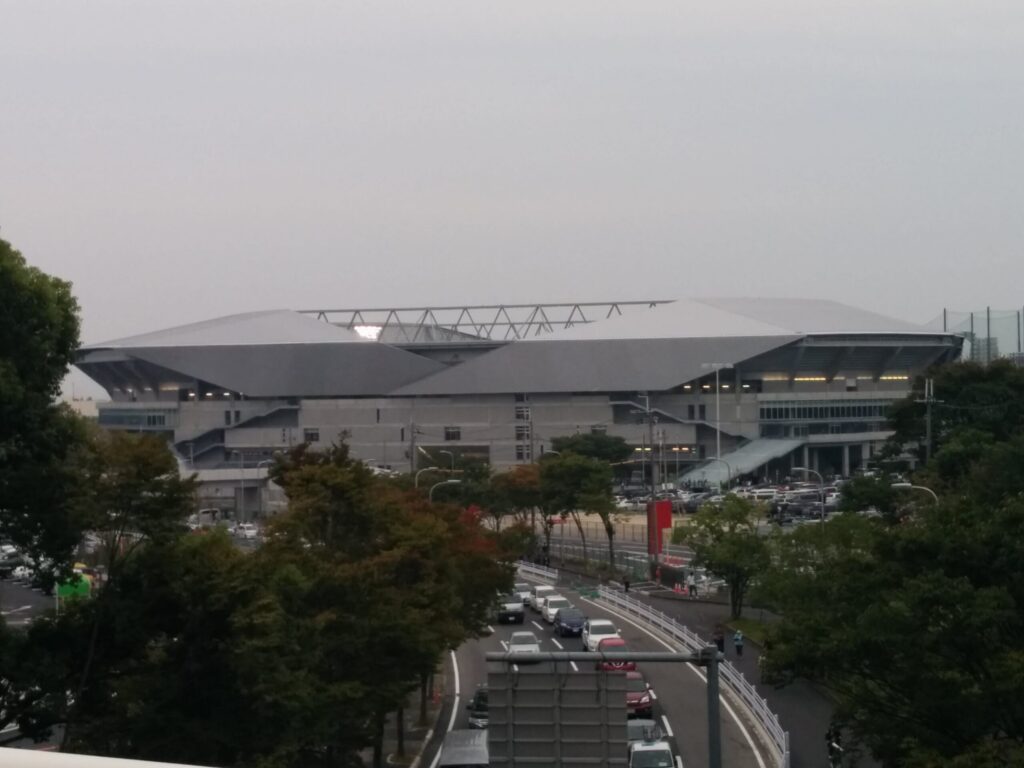
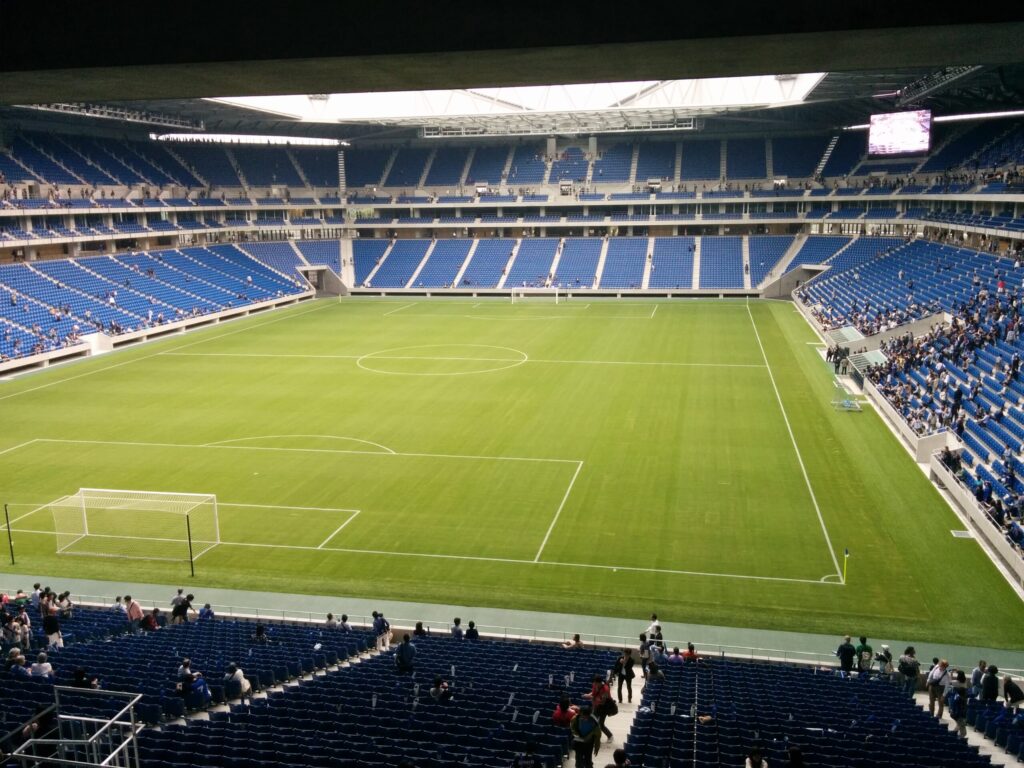
    Panasonic Stadium Suita is the home ground of Gamba Osaka, a club in J1 League — the top division of Japan’s professional football league, known as the J.League. The stadium’s official name is “Mitsui Suita City Football Stadium,” but it is currently called Panasonic Stadium Suita through a naming rights sponsorship — a deal where a company pays to have its name on the stadium. The sponsor is Panasonic, one of Japan’s leading electronics companies.

    This stadium has a few features that are rare even by global standards. It was the first football-only stadium in Japan built entirely with donations from local citizens and companies — no public tax money was used. It holds around 40,000 spectators. The distance from the pitch to the touchline (sideline) is only about 7 metres, which puts fans very close to the action. Every seat is covered by a roof, so you stay dry even on rainy days.


    Getting from Kansai International Airport (KIX) to the Stadium: Overview

    By train, the journey from KIX to the stadium takes about 75 to 90 minutes. KIX is not close to the stadium, so please allow plenty of time.

    The basic steps are simple:

    1. Travel from KIX into central Osaka.
    2. Take the Osaka Metro (subway) Midosuji Line to Senri-Chuo Station.
    3. Transfer to the Osaka Monorail and get off at Banpaku-Kinen-Koen Station.
    4. Walk about 15 to 20 minutes from the station to the stadium.

    By Train: Two Route Options

    Route A: Via JR “Haruka” Express Train (Recommended for easy transfers)

    Step 1 | KIX → Shin-Osaka Station (JR Haruka)

    At JR Kansai Airport Station, board the “Haruka” — an airport express train operated by JR West that connects KIX to central Osaka. It takes about 50 minutes to Shin-Osaka Station.

    Note: The Haruka requires a separate limited express ticket in addition to your base fare. You cannot use an IC card alone. There is a discounted ticket called the “HARUKA Discount Ticket for Foreign Visitors.” Show your passport at the JR ticket window or ticket machine at KIX to buy it at a lower price.

    Step 2 | Shin-Osaka → Senri-Chuo Station (Osaka Metro Midosuji Line)

    From Shin-Osaka, take the Osaka Metro Midosuji Line towards Senri-Chuo. Ride to the last stop, Senri-Chuo Station. Note: the train continues onto a separate company’s line called the Kita-Osaka Kyuko Line, but you do not need to transfer — just stay on the same train. This takes about 20 minutes from Shin-Osaka. The fare is about ¥290.

    Step 3 | Senri-Chuo → Banpaku-Kinen-Koen Station (Osaka Monorail)

    At Senri-Chuo Station, transfer to the Osaka Monorail — an elevated rail line that runs on a single track above the ground. Take the train towards Banpaku-Kinen-Koen (Expo Commemorative Park). It is two stops, about 5 to 6 minutes. The adult fare is ¥250.

    Total time (Route A): Approximately 75 to 90 minutes from KIX to Banpaku-Kinen-Koen Station, including transfer time.


    Route B: Via Nankai Railway + Osaka Metro (Budget-friendly option)

    Step 1 | KIX → Namba Station (Nankai Railway)

    From Nankai Kansai Airport Station, take the Nankai Railway. The limited express “Rapi:t” reaches Namba Station in about 40 minutes (adult fare: ¥1,430, reserved seat). The cheaper option is the Airport Express, which takes about 65 minutes (fare: approx. ¥930). If you want to save money, the Airport Express is a good choice.

    Step 2 | Namba → Senri-Chuo Station (Osaka Metro Midosuji Line)

    From Namba Station, take the Osaka Metro Midosuji Line heading towards Senri-Chuo. Ride to the last stop, Senri-Chuo Station. This takes about 30 minutes.

    Step 3 | Senri-Chuo → Banpaku-Kinen-Koen Station (Osaka Monorail)

    Same as Route A, Step 3. Take the Osaka Monorail for two stops, about 5 to 6 minutes.

    Total time (Route B): Approximately 85 to 100 minutes from KIX to Banpaku-Kinen-Koen Station, including transfer time.


    How to Buy Tickets: A Guide for First-Time Visitors

    Use an IC Card “ICOCA” (Most recommended)

    The easiest way to use trains in Japan is with an IC card — a prepaid contactless card that you tap on the ticket gate reader. In the Kansai region, the most widely used IC card is ICOCA, issued by JR West. It works on Osaka Metro, Osaka Monorail, Hankyu Railway, and many other lines.

    How to buy ICOCA: Look for the ticket vending machines near the JR ticket gates at KIX. You can switch the display to English. Insert ¥2,000: ¥500 is a refundable deposit, and the remaining ¥1,500 is your travel credit.

    Tip: If you already have a Suica card (the IC card from the Tokyo area), you can use it on most lines in Kansai too, including mobile Suica on your smartphone.

    Haruka Limited Express Ticket

    If you use the Haruka, you need to buy a limited express ticket separately. Use the HARUKA Discount Ticket for Foreign Visitors to get a lower price. Bring your passport to the JR Kansai Airport Station ticket window or an English-supported ticket machine.


    Walking from Banpaku-Kinen-Koen Station to the Stadium: Two Routes

    When you exit Banpaku-Kinen-Koen Station, you will see EXPOCITY — a large shopping complex — directly in front of you. The stadium is beyond it. There are two walking routes to choose from.


    Walking Route 1: The Nifrel Route (Fewer steps — good if you have luggage)

    Exit the ticket gate at Banpaku-Kinen-Koen Station and go down the ramp. Turn left at the bottom. You will see signs for “Nifrel” — a combined aquarium and zoo — on your left. Walk along the path next to it, following the Osaka Monorail tracks. You will reach a pedestrian overpass with a ramp (no stairs). Cross it using the ramp — easy for suitcases and pushchairs. Once across, the stadium will be on your right.

    Walking time: About 20 minutes. Best for: Visitors with large bags, suitcases, or pushchairs. The path is mostly flat with gentle slopes.


    Walking Route 2: The South Car Park Route (Official recommended route)

    Exit the ticket gate and go down the ramp. Turn right at the bottom. Follow the signs for EXPOCITY on your right, then continue following the signs towards the stadium. This route includes an uphill section and stairs.

    Walking time: About 15 minutes. Best for: Visitors travelling light. Note that this route is shorter but has uphill sections and stairs, which can be difficult with large luggage. On match days, staff members stand along the route holding direction signs, so it is easy to follow.


    Can I Take a Bus?

    Match-Day Special Bus (from JR Ibaraki Station)

    On Gamba Osaka home match days, a special bus service runs from JR Ibaraki Station to the Banpaku-Kinen Kyogijo (Japan Garden area), operated by Kintetsu Bus. Buses depart from Stop No. 4 at the west exit, starting 4 hours before kick-off (kick-off = match start time). From the bus stop, you still need to walk about 15 minutes to the stadium. Note that JR Ibaraki Station is not directly accessible from KIX — you will need to take a connecting train.

    How to reach JR Ibaraki Station from KIX: KIX → (JR Haruka) → Shin-Osaka → (JR Kyoto Line, Rapid or Local train) → JR Ibaraki Station (approx. 13 minutes). Do not take the “Shin-Kaisoku” (Special Rapid); it does not stop at JR Ibaraki. Take the Rapid or Local train instead.

    Is There a Direct Bus from KIX to the Stadium?

    Currently, there is no direct bus from KIX to the stadium. However, a ride-sharing service called “Near Me” can take you directly from KIX to the stadium for approximately ¥9,800 per person (with the shared-ride discount). This may be a good option for groups or travellers with heavy luggage.


    Summary: Which Route Should You Take?

    If this is your first visit, Route A via the JR Haruka is the best choice. It has fewer transfers and is easier to follow. For the walk from the station to the stadium, choose Walking Route 1 (the Nifrel Route) if you have luggage — it avoids stairs and most slopes.

    On match days, many supporters travel the same route. It gets crowded. Try to arrive at Banpaku-Kinen-Koen Station 60 to 90 minutes before kick-off.


    ※ Fares and timetables are subject to change. Please check the official websites of each transport operator for the latest information. ※ For special bus service details on match days, check the official Gamba Osaka website at gamba-osaka.net.

  • How to Get from Narita Airport to Mercari Stadium

    ── A Complete Guide for First-Time J.League Visitors ──


    About the Stadium

    In Kashima City, Ibaraki Prefecture, there is one of Japan’s finest football-only stadiums. Its official name is Ibaraki Prefecture Kashima Soccer Stadium. The Japanese e-commerce company Mercari — best known for running Japan’s largest second-hand marketplace app — holds the naming rights (the right to give a stadium its commercial name). Because of this, the stadium is now widely called Mercari Stadium Kashima.

    This stadium is the home ground of Kashima Antlers, the most decorated club in J.League history. The J.League is Japan’s professional football league; Kashima Antlers compete in J1, the top division. The stadium holds around 40,728 spectators. The stands are built very close to the pitch, which creates an intense, exciting atmosphere.


    Two Ways to Get from Narita Airport to the Stadium

    There are two main options for travelling from Narita International Airport to Mercari Stadium.


    Option 1: Direct Bus (Simplest, but Booking Required)

    A direct bus runs from Narita Airport to the stadium. This bus only operates on match days. The bus stop is at Bus Stop No. 28 at Narita Airport.

    The bus is scheduled to arrive at the stadium about 90 minutes before kick-off. However, there is only one departure per match. You must book in advance by phone: Kantets Kanko — Itako Travel Centre, TEL: 0299-80-0037

    Once you board, there are no transfers. The bus takes you directly to the stadium entrance. Please check the fare at the time of departure.

    Advantage: No transfers. This is the easiest option. ⚠️ Note: Only one bus per match. Booking is essential. Does not run on non-match days.


    Option 2: Train (Reliable and On Time — Recommended for First-Timers)

    Trains are not affected by traffic. They run on schedule. If you follow the steps below, you will reach the stadium safely and without confusion.

    Step 1: Narita Airport Station → Narita Station

    Go to JR Narita Airport Station (or JR Airport Terminal 2 Station), located underground at the airport. Take the JR Narita Line and get off at Narita Station. This takes about 10 minutes.

    Step 2: Narita Station → Kashima-Jingu Station

    At Narita Station, change trains to the JR Narita Line heading towards Choshi or Kashima-Jingu. Your destination is Kashima-Jingu Station (鹿島神宮駅). Depending on your train, you may need to change trains again at Sawara Station (佐原) or Katori Station (香取) onto the JR Kashima Line. This leg takes about 1 hour.

    🚉 Total travel time: Approximately 1 hour 20–30 minutes from Narita Airport to Kashima-Jingu Station 💴 Fare (IC card): Approximately ¥990

    ⚠️ Important: Trains Are Infrequent

    Beyond Narita Station, trains run only once every 1–2 hours. Always check the timetable before you leave. You can search on the JR East official website or Google Maps.


    From Kashima-Jingu Station to the Stadium

    Once you arrive at Kashima-Jingu Station, you have a few ways to reach the stadium.

    On Match Days: Shuttle Bus

    On match days, a shuttle bus runs frequently from the bus rotary outside Kashima-Jingu Station. Extra buses are added before and after the match. Fare: ¥290 for adults (contactless IC cards accepted). The ride takes about 10–15 minutes.

    On Match Days: Kashima Soccer Stadium Station (Temporary)

    On match days only, a special station called Kashima Soccer Stadium Station opens. This is a temporary station (open on match days only) on the Oarai-Kashima Line. It is located just a 2–3 minute walk from the stadium entrance. If you are travelling on the Oarai-Kashima Line, get off here and walk directly to the stadium. You can use your Suica IC card at this station if you boarded from the JR Narita area.

    ⚠️ This station is closed on non-match days. Check the Kashima Antlers official website for the operating schedule.

    Taxi

    Taxis are available from the taxi rank in front of Kashima-Jingu Station. The journey takes about 5–10 minutes. The estimated fare is around ¥700–¥1,000. After the match, taxis can be hard to find due to large crowds. Plan ahead if you want to use a taxi on the way back.


    How to Buy Tickets and Use the Train — A Guide for International Visitors

    Recommended: Use a Suica (Contactless Smart Card)

    In Japan, a contactless smart card makes train travel much easier. Think of it like London’s Oyster card — you simply tap the card on the reader at the ticket gate. You do not need to buy a paper ticket every time you travel.

    Welcome Suica (For International Visitors)

    You can buy a Welcome Suica at the JR East Travel Service Centre inside Terminal 1 or Terminal 2 at Narita Airport. There is no deposit required. The card is valid for 28 days. You can top up (add money to) the card at ticket machines in stations or at convenience stores.

    How to Buy at a Ticket Machine

    1. Select “English” on the screen.
    2. Choose “Purchase Suica”.
    3. Enter the amount you want to load (e.g., ¥2,000 or ¥3,000).
    4. Pay with cash or a credit card (availability varies by machine).

    💡 Tip: The total fare for the route to the stadium is about ¥1,000–¥1,500. Loading ¥2,000–¥3,000 gives you a comfortable buffer.

    Buying a Paper Ticket

    1. Select “English” on the ticket machine screen.
    2. Find your destination on the route map or fare chart and check the correct fare.
    3. Press the button for that fare amount and insert cash.
    4. Collect your ticket and receipt.

    Summary: Which Route Should You Choose?

    Direct BusTrain (Recommended)
    Travel timeApprox. 1–1.5 hoursApprox. 1 hr 20–30 min
    TransfersNone1–2 transfers
    Traffic riskYesNone
    BookingRequired (by phone)Not required
    Non-match daysDoes not runAvailable
    DifficultyEasySlightly more complex

    Our recommendation: For first-time visitors, the train is the better choice. If you check the timetable in advance, you will reach the stadium with no problems. With a Suica card, the journey is simple and stress-free. On the way, you will also see rice fields, rivers, and quiet Japanese countryside from the train window — a special memory that is all part of the J.League experience.


    Final Checklist

    • Check the latest timetables on the JR East official website (jr-east.co.jp).
    • Visit the Kashima Antlers official website (antlers.co.jp) for stadium access information and special transport services on match days.
    • After the match, the area around the stadium is very busy. Give yourself extra time when leaving.
  • How to Watch J.League from Outside Japan: A Complete Guide


    Introduction

    J.League is Japan’s professional football league. It has three divisions: J1, J2, and J3. Clubs move up to a higher division if they finish near the top of the table (promotion), or drop down to a lower division if they finish near the bottom (relegation). This system keeps every match competitive.

    J.League is growing in popularity around the world. But many fans outside Japan ask the same question: “How can I watch the matches?” This guide explains every way you can watch J.League from outside Japan.


    How J.League Is Broadcast in Japan

    First, let’s cover the basics.

    Inside Japan, DAZN holds the rights to broadcast almost every J.League match. DAZN is a sports-only streaming service — think of it as “Netflix, but for sport.” If you are in Japan and want to watch J.League, a DAZN subscription is the standard option.

    That said, there are also some free ways to watch.


    1. Free Options

    If you want to watch J.League without paying, here are your choices.

    ABEMA is a free internet TV service based in Japan. It live-streams one or two J.League matches per round, covering J1 through J3. You do not need to create an account, so it is very easy to use.

    DAZN Freemium is DAZN’s free membership plan. You cannot watch every match, but you can access some matches and content for free. It is a good way to try J.League before committing to a paid plan.

    NHK BS and local TV channels broadcast around one match per round on free-to-air or satellite television. NHK is Japan’s public broadcaster.

    The official J.League YouTube channel offers free highlight videos and goal clips after each match. It does not stream matches live, but it is the fastest way to check results and key moments.


    2. DAZN Bundle Plans

    DAZN also offers combined plans with other services.

    DMM × DAZN Hodai bundles DAZN’s standard plan with DMM Premium, an entertainment service. It gives you access to all J.League matches.

    ABEMA de DAZN lets you watch DAZN content inside the ABEMA app or website. All live matches are available through this plan.

    DAZN for docomo is a bundle plan for customers of NTT Docomo, one of Japan’s major mobile network operators. Docomo subscribers can access DAZN at a discounted price.


    3. Cup Competitions

    J.League is not the only competition in Japanese club football. There are also two major cup tournaments.

    The Levain Cup (officially the JLEAGUE Levain Cup) is a cup competition for professional J.League clubs. It follows a knockout format — similar to the EFL Cup (the League Cup) in England.

    The Emperor’s Cup (Tennō Hai) is an open knockout tournament that all football clubs in Japan can enter, not just professional ones. It is similar to the FA Cup in England.

    Some matches from these cup competitions, along with related programmes, are also available on SKY PerfecTV! and SPOOX.


    Watching J.League from Outside Japan

    Now, the main question: how do you watch J.League if you live outside Japan?

    The answer depends on where you live. In some countries, you can watch J.League through DAZN or a local sports channel. However, in many countries, there is no official broadcast of J.League.

    If there is no official broadcast in your country, you can use a VPN (Virtual Private Network). A VPN makes your internet connection appear to come from inside Japan. This allows you to access Japanese streaming services such as DAZN and ABEMA.


    3 Recommended VPNs

    When choosing a VPN, the most important factors are speed, stability, and price. Here are three strong options.


    ① NordVPN — Best Overall Choice

    NordVPN is one of the most widely used VPN services in the world. It offers fast connection speeds and works reliably for live J.League streams on YouTube and other streaming platforms. It also has strong security features and is easy to set up, even if you have never used a VPN before. It is the best starting point for most users.


    ② Surfshark — Best Value for Money

    Surfshark’s biggest advantage is that one account can connect an unlimited number of devices at the same time. This means you can share the cost with family or friends. It is especially popular among younger fans who want to split the subscription fee. The price is also lower than many competitors.


    ③ ExpressVPN — Best for Reliability and Quality

    ExpressVPN offers industry-leading connection stability and security. It is especially reliable in countries with strict internet restrictions, such as China. The price is higher than the other options, but if you want consistent performance and peace of mind, ExpressVPN is the top choice.


    Summary

    MethodCostAll Matches?Works Outside Japan?
    ABEMA (free)Free✗ (select matches)VPN required
    J.League Official YouTubeFree✗ (highlights only)
    DAZN FreemiumFree✗ (select matches)VPN required
    DAZN (paid plan)PaidVPN required
    Local broadcast in your countryDepends on planDepends on country

    J.League is one of the most well-organised and technically strong leagues in Asian football. Even from outside Japan, you can watch it — you just need to choose the right method. Start with a free option first. If you enjoy what you see, consider signing up for a paid DAZN plan.


    Note: Prices and service availability may change. Please check each official website for the latest information. Also, please make sure that using a VPN is legal and allowed under the terms of service in your country.

  • The Birth of the J.League and the Turbulent 1990s

    The Dawn of Japanese Football

    On May 15, 1993, Japanese football changed forever. The J.League kicked off its very first season.

    Before that day, football in Japan was mostly amateur. Players competed for company-sponsored teams, not professional clubs. The J.League changed all of that. For the first time, Japan had a true professional football league.

    The opening match was a massive event. Around 55,000 fans packed the National Stadium in Tokyo. Verdy Kawasaki (now known as Tokyo Verdy) faced Yokohama Marinos (now Yokohama F·Marinos). Millions more watched live on television across the country.


    The Cup Competition That Actually Came First

    Let’s go back one step.

    Official J.League competition actually started before the league itself. In 1992 — one year before the league season began — the Yamazaki Nabisco Cup was held. Today, this tournament is called the J.League YBC Levain Cup.

    Think of it like a domestic cup competition, similar to the FA Cup in England. It is a separate knockout tournament, independent from the league title. The winner of the first edition was Verdy Kawasaki.


    The Boom Years — and the Hard Times That Followed

    In the early 1990s, the J.League became a national phenomenon. Stadiums were sold out every week. Players were treated like pop stars. Clubs signed international stars one after another.

    Zico, the legendary Brazilian midfielder, joined Kashima Antlers. Pierre Littbarski, a World Cup winner with West Germany, came to JEF United Ichihara. These players raised the quality of football across the whole league.

    But the boom did not last.

    From around 1997, attendance figures dropped sharply. At the same time, Japan’s economy fell into a serious recession. The corporations that financially backed many clubs began to struggle. The entire league faced a financial crisis.


    A Tragic End: Yokohama Flügels

    One of the most shocking moments in J.League history happened in the late 1990s.

    Yokohama Flügels, one of the league’s founding clubs, ceased to exist.

    In 1998, the club’s main corporate backer, All Nippon Airways (ANA), withdrew its support due to financial difficulties. Flügels was merged into their city rivals, Yokohama Marinos. In effect, the club was gone.

    The fans refused to give up. They launched a campaign to save the team. But the merger could not be stopped.

    Flügels played their final official match on January 1, 1999 — the final of the Emperor’s Cup. The Emperor’s Cup is Japan’s oldest national cup competition, open to both professional and amateur clubs. Think of it as Japan’s version of the FA Cup.

    In that very last match, Flügels produced a miracle. They defeated the powerful Kashima Antlers with a dramatic comeback to win the title. The fans in the stadium wept — tears of joy and sadness mixed together.

    That match is still remembered as one of the most emotional days in Japanese football history.


    What the 1990s Left Behind

    The J.League experienced both glory and hardship in the 1990s. But those years were essential to the growth of Japanese football.

    In 1998, the Japan national team qualified for the FIFA World Cup for the very first time. That historic achievement was built on the foundation of the J.League’s first decade.

    The league survived a very difficult period. And from that struggle, it began its journey toward becoming one of the most-watched leagues in the world.