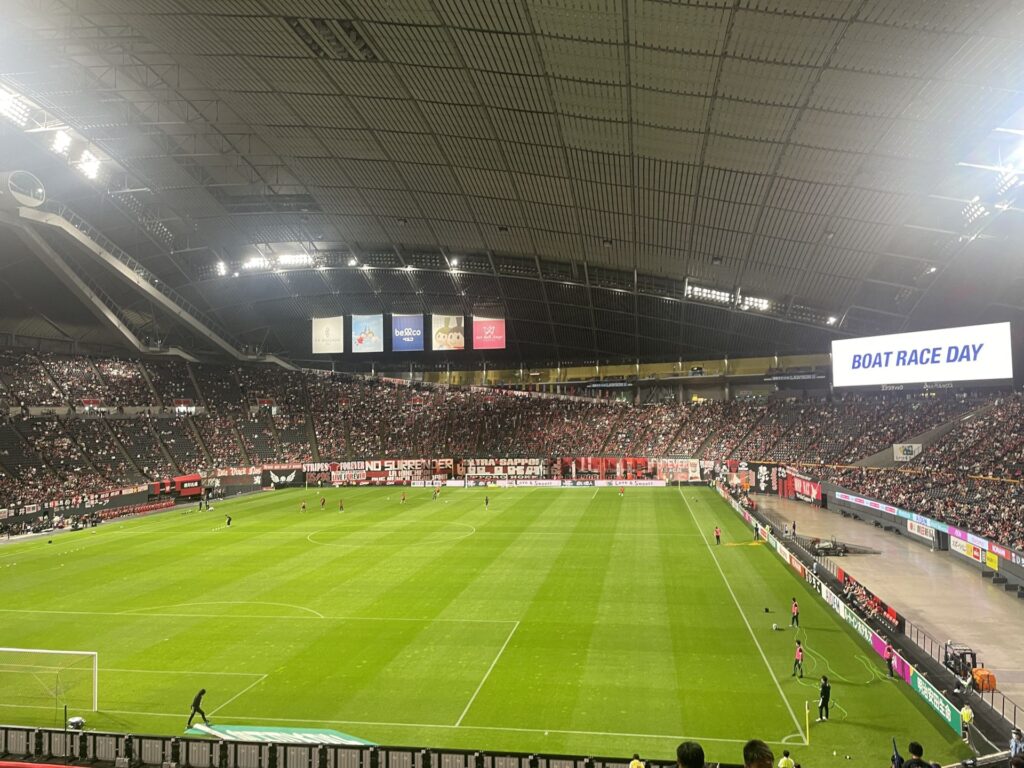
You Haven’t Experienced J-League Until You’ve Tried the Stadium Food!
The Complete Guide to Staguru — Japan’s Unique Matchday Food Culture
What Is Staguru?
When you watch a J-League match, there is something almost as exciting as the football on the pitch. It is called staguru.
“Staguru” is a shortened Japanese word for stadium gourmet. In English, the closest terms are “stadium food” or “matchday food” — but J-League staguru goes far beyond that. In many European football stadiums, hot dogs and popcorn are the standard options. J-League stadiums are completely different. Each matchday, you will find local regional dishes, popular local restaurants, special menus created in collaboration with players, and seasonal limited items — all inside the stadium. The atmosphere feels more like a small food festival than a typical sports venue.
More than 60 clubs across Japan bring local ingredients and traditional dishes into their stadiums. Fans often arrive several hours before kick-off just to enjoy the food. Some supporters — passionate fans — even travel to away matches specifically for the staguru experience.
Why Is J-League Staguru So Special?
The J-League was founded in 1993. From the beginning, clubs have followed a philosophy of being “rooted in the local community.” Sharing local food culture is part of that idea. Each club works with local restaurants and food producers to create exclusive stadium menu items.
In previous seasons, an event called Staguru Fes (Stadium Food Festival) was held every February, bringing clubs from all over Japan together to showcase their regional specialties. It was held alongside the season-opening ceremonial match — a one-off game between the previous season’s J1 League champion and the Emperor’s Cup winner. The Emperor’s Cup (officially the JFA Cup) is a nationwide knockout cup competition open to clubs from all levels of Japanese football, similar to the FA Cup in England. When it took place, the Staguru Fes was a great opportunity to try dishes from many different regions in one place, on one day.
⚠️ Please note: 2026 is a year of major structural changes for the J-League. As of the time of writing, the scheduling of the Super Cup and the holding of Staguru Fes in 2026 have not been officially confirmed. Please check the J-League’s official website and social media channels for the latest updates before making any plans.
3 Reasons We Recommend Staguru to International Visitors
Reason 1: Taste local flavours inside the stadium. Japan’s food culture varies greatly from region to region. In Sendai, you can try grilled beef tongue. In Osaka, there is takoyaki (octopus dumplings). In Tochigi, you will find gyoza dumplings from Utsunomiya City. In Shizuoka, Fujinomiya yakisoba noodles are a must. Just by going to the stadium, you can discover the food culture of that region.
Reason 2: Food culture and supporter culture go hand in hand. Buying staguru before a match, having a beer or soft drink, and talking with friends — this is a central part of Japanese football culture. Win or lose, the memory of “that dish at that stadium” always stays with you.
Reason 3: Easy to enjoy, even for first-time visitors. You do not need to speak Japanese. Most stalls use picture menus, and the open-counter format makes ordering simple. Some popular stalls attract long queues, but that is all part of the matchday experience in Japan.
Regional Staguru Guide: What to Eat and Where
🏔 Hokkaido
Hokkaido Consadole Sapporo (Home stadium: Sapporo Dome)
Hokkaido is one of Japan’s most celebrated food-producing regions. At Consadole’s stadium, the “Victory Red Beef Kalbi Curry” draws a crowd at every match. The name reflects the club’s red and black team colours. It is a hearty curry filled with tender beef short ribs — the perfect warm dish for Hokkaido’s cold climate. Creating a dish around team colours is a distinctly J-League idea.
⚽ Kanto Region (Greater Tokyo Area)
Kawasaki Frontale (Home stadium: Todoroki Athletics Stadium, Kawasaki City)
One long-loved dish at Frontale’s stadium food area, known as “Fronte Park,” is the “Kawasaki Special Salt Chanko.” Chanko-nabe is a traditional Japanese hot pot originally eaten by sumo wrestlers. It is made with chicken, vegetables, and a light salt-based broth. Kawasaki City was once home to a sumo stable, and this recipe carries on that local tradition. Warming up with a bowl of chanko before kick-off is a classic Fronte Park sight on matchdays.
Shonan Bellmare (Home stadium: Lemongas Stadium Hiratsuka, Kanagawa Prefecture)
The waters of Sagami Bay, off the Shonan coast of Kanagawa, are famous for shirasu — tiny young fish (whitebait). Bellmare’s stadium serves a popular bento (lunch box) that combines slow-boiled shirasu with homemade roast beef. This dish has won the supporters’ vote five consecutive years running.
Kashiwa Reysol (Home stadium: Sankyo Frontier Kashiwa Stadium, Chiba Prefecture)
Locally called “Hitachidai,” this stadium is known for its “Reysol Curry Rice.” It is a well-spiced curry topped with an onsen tamago — a soft egg slowly cooked at low temperature in hot spring water. For many supporters, this dish signals the start of a new season.
Kashima Antlers (Home stadium: Kashima Soccer Stadium, Ibaraki Prefecture)
Kashima Antlers are the most successful club in J-League history. Their stadium is also well known for its food. “Harami Meshi” is a generous rice bowl topped with beef skirt steak — a flavourful cut from the diaphragm of the cow. Another classic here is “motsu-ni” — a rich Japanese stew made with pork offal, vegetables, and a miso-based broth. It is especially popular on cold winter matchdays.
Tochigi SC (Home stadium: Kanseki Stadium Tochigi, Tochigi Prefecture)
Utsunomiya City in Tochigi Prefecture is one of Japan’s most famous cities for gyoza dumplings. The stadium naturally features pan-fried gyoza — dumplings with a crispy bottom and juicy filling. Different local gyoza restaurants take turns at each match, giving fans a slightly new experience every time. It is a great example of combining football and local food tourism in one visit.
🦑 Tohoku Region (Northern Japan)
Montedio Yamagata (Home stadium: ND Soft Stadium Yamagata)
Montedio Yamagata is one of the J-League’s standout clubs for stadium food. Their food area, called “Blue Kitchen,” has more than 30 stalls — one of the largest in the entire league. It opens four hours before kick-off, so supporters can take their time eating and exploring. The highlight is “motsu nikomi” — a slow-cooked pork offal stew using offal from the Shonai area of Yamagata Prefecture, prepared with three types of white miso and more than ten spices. This dish has won the J-League Stadium Food Grand Prix three years in a row.
Vegalta Sendai (Home stadium: Yurtec Stadium Sendai)
Sendai is famous across Japan for grilled beef tongue (gyutan). Thick slices of beef tongue are grilled over charcoal — a dish born right here in Sendai. It may sound unusual to some international fans, but it is tender with a slight chew, seasoned simply with salt, and completely delicious. Honest advice: just order it. You will not regret it.
🐙 Kansai Region (Osaka Area)
Gamba Osaka (Home stadium: Panasonic Stadium Suita, Osaka Prefecture)
Osaka is the home of takoyaki. Takoyaki are small round dumplings of batter with octopus inside, cooked on a special iron griddle and topped with sauce, mayonnaise, bonito flakes, and dried seaweed powder. At Gamba’s stadium, the famous Dotonbori restaurant “Kukuru” serves its signature giant-octopus takoyaki. Kukuru’s octopus pieces are two to three times larger than usual. The outside is crispy; the inside is soft and creamy. This dish has earned official Hall of Fame status in the J-League Stadium Food Awards — and eating it, you will understand why.
Cerezo Osaka (Home stadium: Yodoko Sakura Stadium, Osaka City)
Cerezo, also based in Osaka, hosts another famous takoyaki shop: “Wanaka.” While Kukuru’s style features big, bold octopus pieces, Wanaka is known for a more traditional and straightforward taste. On Osaka Derby day — the match between Gamba and Cerezo, two clubs from the same city — supporters often spend as much time debating “Kukuru vs. Wanaka” as they do talking about the match itself.
Cerezo also has a second beloved dish: “Hiden no Karaage” (Secret-Recipe Fried Chicken). Karaage is Japanese-style fried chicken marinated in soy sauce and ginger before frying. At Cerezo’s stall, you choose from 11 different sauces to top your chicken. This dish has received a Best Eleven award at the J-League Stadium Food Grand Prix.
Vissel Kobe (Home stadium: Noevir Stadium Kobe)
Vissel Kobe, one of the leading clubs in J1 League — the top division of Japanese professional football — serves “sobameshi” as their signature Kobe dish. Sobameshi is a Kobe specialty: fried noodles and steamed rice stir-fried together on a hot iron griddle. It was born in the Nagata district of Kobe, a working-class neighbourhood with a proud local identity. You start eating and think, “Oh, it’s just noodles and rice” — and then somehow the plate is empty before you know it. Enjoying a dish born in Kobe at a Kobe club’s stadium: it does not get more fitting than that.
🌊 Chugoku, Shikoku & Kyushu Regions
Fagiano Okayama (Home stadium: City Light Stadium, Okayama Prefecture)
The “Faji-kara Donburi” is a rice bowl piled high with “Faji-kara” — the club’s own original fried chicken — served over torimeshi, a seasoned rice dish with chicken that is a local Okayama specialty. This dish sells out at almost every match. The queue forms well before kick-off.
Kamatamare Sanuki (Home stadium: Pikara Stadium, Kagawa Prefecture)
Kagawa Prefecture is famous across Japan for udon noodles. The club’s own name comes from “kamatama udon” (a style of egg-topped udon noodles) plus “mare,” the Italian word for “sea.” At the stadium, the popular item is “Kama-coro” — a croquette filled with mashed potato and meat, made using locally grown Kagawa potatoes. It has won the J-League Stadium Food Grand Prix two years in a row.
Sanfrecce Hiroshima (Home stadium: Edion Peace Wing Hiroshima)
The signature stadium dish in Hiroshima is okonomiyaki. Hiroshima okonomiyaki is made in a completely different way from the Osaka version. It is a layered savoury pancake: thin batter, cabbage, pork, yakisoba noodles, and egg are cooked in separate layers on a griddle, then stacked together. People outside Hiroshima often call it “Hiroshima-style,” but for locals, this is simply the real okonomiyaki — full stop. That local pride is part of what makes it special. For international visitors, calling it Hiroshima okonomiyaki is the natural and respectful way to refer to it. The stadium has a dedicated food information page, and you can also find special menus produced by the players.
Kagoshima United FC (Home stadium: Shiranami Stadium, Kagoshima City)
Kagoshima, in the far south of Kyushu island, is famous for Kurobuta pork — a premium breed of black-haired pig known for its rich flavour and tender texture. At Kagoshima United’s stadium, popular items include the “Afro Sand” pork sandwich made with Kurobuta, and “Tenko-mori Gobo-ten Udon” — udon noodles topped with deep-fried burdock root, served in a broth made from dried bonito and kelp. You can also try “Keihan” — a traditional chicken and rice dish with clear broth, a local speciality from Amami Island, a southern island that belongs to Kagoshima Prefecture. This stadium has one of the most diverse and distinctive staguru cultures in the J-League.
The Stadium Belongs to Everyone — J-League’s Spirit of Omotenashi
Here is one feature of J-League that often surprises international football fans.
In many European and South American football stadiums, away supporters are separated from home supporters, and tensions can run high. In the J-League, the atmosphere is completely different.
At many J-League stadiums, away clubs are given a space to sell their own regional staguru inside the home stadium. This means home supporters can enjoy food from the away team’s region. On top of that, the away club’s official merchandise shop sometimes operates inside the same stadium, selling the opposing team’s shirts and goods. The sight of home supporters casually walking past an away team’s merchandise stall might be hard to picture in some other football cultures — but in Japan, it is a normal part of the matchday.
This reflects the J-League’s core philosophy: building a culture where local communities enjoy football together. The stadium is both a place of competition and a place of entertainment. Respect for opponents and a love of the matchday experience exist side by side. Away supporters who travel from far away are welcomed warmly at the home ground. This spirit of omotenashi — Japanese hospitality — is an essential part of Japanese football culture.
Staguru Changes Every Match — That Is Part of the Fun
One exciting thing about staguru is that it is never exactly the same. Depending on the match, clubs may offer menus inspired by the visiting team’s region, special event menus, player-produced menus, or seasonal limited items. Even if you visit the same stadium many times, you can always find something new to try. That is one of the reasons J-League fans keep coming back.
Please note that menus and stall availability can change by match day. Check each club’s official website for the latest information before you visit.
5 Tips to Enjoy Staguru to the Fullest
1. Arrive early. Popular items can sell out two to three hours before kick-off. Try to arrive at the stadium one and a half to two hours before the match and take a walk around the food area first.
2. Prepare for cashless payment. More and more J-League stadium stalls now accept credit cards and electronic payment (IC cards such as Suica or Pasmo). It is useful to have both options ready, though some smaller stalls are still cash only.
3. Keep an eye on Staguru Fes. In previous seasons, the season-opening Super Cup match — a one-off game between the J1 League and Emperor’s Cup champions — was held every February alongside the Staguru Fes event, where clubs from all over Japan gathered in one place. When it happens, it is the best single opportunity to try dishes from multiple regions on the same day. However, as noted above, the 2026 schedule has not been officially confirmed due to structural changes in the J-League. Check the official J-League website for the latest information.
4. Take a photo before you eat. J-League staguru often looks as impressive as it tastes. Many dishes are bold and visually striking. Take your photo first, then enjoy.
5. Start with one dish that truly represents the local area. In Sendai, try grilled beef tongue. In Osaka, try takoyaki. In Tochigi, try gyoza. In Shizuoka, try Fujinomiya yakisoba. Choosing “food that means something in that specific place” turns your matchday into a genuine travel memory.
Final Thoughts
J-League staguru is not simply “stadium food.” It is a matchday culture unique to Japan — where local food traditions, club identity, and supporter habits come together as one. Whatever the result on the pitch, the staguru will not let you down.
Next time you have the chance to visit a J-League match, head to the stadium three hours before kick-off. Come hungry. Come curious. That is all you need — the rest takes care of itself.
※ Prices, menus, and stall information are subject to change. Please check each club’s official website for the latest details before matchday.